Safe Sleep at Daycare: What Parents Should Ask
- Ask how every nap actually works
- Start with the national safe-sleep basics
- Request the written infant-sleep policy
- Verify licensing and inspection information
- Look at the sleep space
- Ask the back-to-sleep question plainly
- Ask what happens after sleep in a car seat or swing
- Clarify blankets, sleep sacks, and swaddling
- Understand supervision and documentation
- Ask how staff learn and practise the policy
- Plan the first-day exchange
- Know what to do when something looks wrong
- A strong answer is visible and repeatable
Ask how every nap actually works
“We follow safe sleep” is a welcome beginning, not a complete answer. For an infant in child care, parents need to know what the written policy says, how staff apply it at 10 a.m. and 4 p.m., what happens when a baby falls asleep somewhere else, and how individual instructions are handled.
Current national health guidance is clear on the essential sleep environment. Licensing adds jurisdiction-specific requirements for child care programs. Those two layers belong in the same conversation, but they are not interchangeable—and neither is improved by advice remembered from a cousin's parenting group.
Use this guide to ask specific questions, observe the room, and verify the provider's records. It cannot evaluate an individual daycare or replace a pediatrician's advice for a particular child.
Start with the national safe-sleep basics
The CDC advises placing babies on their backs for all sleep. The sleep surface should be firm, flat, level, and not inclined, with a fitted sheet. Keep soft objects and loose bedding out of the sleep area.
The American Academy of Pediatrics' current parent guidance says to use a crib, bassinet, portable crib, or play yard that meets current Consumer Product Safety Commission standards. It also says sitting devices—including car seats, strollers, swings, infant carriers, and slings—are not recommended for routine sleep, particularly for young infants. If a baby falls asleep in one, move the baby to a firm sleep surface on the back as soon as practical.
These recommendations apply beyond nighttime at home. A nap in child care is still sleep. Ask the program to show how these basics appear in policy, staff training, room setup, and daily practice.
Request the written infant-sleep policy
Ask for a copy before enrollment or as soon as sleep care becomes relevant. Look for clear language on:
- Placing each baby on the back for every sleep.
- The approved sleep spaces and mattresses.
- Keeping the sleep space clear of soft items and loose bedding.
- Clothing and wearable-blanket rules.
- What staff do when a baby falls asleep in a sitting device.
- How sleep is supervised, checked, and documented.
- How staff respond when a baby rolls.
- How a clinician's individual medical instruction is received and recorded.
- How families are informed about sleep.
Compare the written document with current national guidance and the state or territory's rules. If a phrase is vague—“unless the baby prefers otherwise,” for example—ask who decides, using what authority and documentation. Preference does not quietly rewrite safety guidance.
Verify licensing and inspection information
In the United States, child care licensing is administered by states and territories, and details vary. Use ChildCare.gov's state and territory resources to find the appropriate provider search, licensing agency, and inspection information.
Confirm whether the program is licensed or operates under a lawful exemption. Review recent monitoring reports for relevant findings and corrective actions. ChildCare.gov explains that licensing establishes minimum health and safety requirements, but does not by itself guarantee broader quality.
Ask the director how the program keeps its policy aligned with changing requirements. Do not use a ratio, sleep-check interval, or equipment rule copied from another state. Verify the exact current provision that applies to this setting and age group.
Look at the sleep space
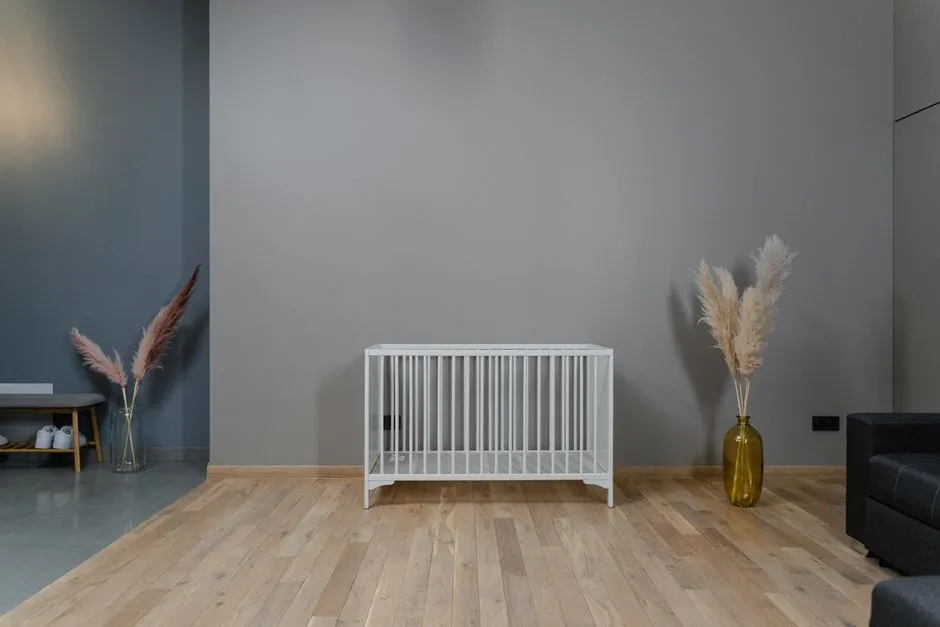
If a tour permits it, view the area while it is set up for ordinary care. Each infant should have access to an approved sleep space consistent with policy and local requirements. Look for a firm, flat mattress with a fitted sheet and a clear interior.
There should not be pillows, quilts, loose blankets, toys, bumper pads, or soft objects in an infant sleep space. A crib does not need styling. The baby has not requested a tiny hotel suite.
Ask how staff prevent cords, monitor wires, window-covering cords, or nearby objects from entering the space. Ask how sheets are assigned, changed, laundered, and stored. Hygiene procedures and equipment rules may vary, so seek the program's specifics rather than inventing a universal laundering schedule.
Ask the back-to-sleep question plainly
Try: “Will my baby be placed on their back for every nap, and how is that practice covered in staff training?” The answer should align with CDC and AAP guidance.
If a baby can roll independently, ask the program to explain its current policy and direct individual questions to the child's pediatrician. Do not ask staff to use wedges, positioners, or improvised restraints. Do not supply a note based only on family preference for another position.
When a clinician believes an individual medical plan is needed, ask the clinician and program to coordinate the required written instruction under applicable rules. This article cannot determine whether an exception is appropriate.
Ask what happens after sleep in a car seat or swing
Daycare includes arrivals, walks, and transitions, so a baby may doze in a car seat, stroller, swing, carrier, or sling. Ask for the exact response: who notices, how promptly the baby is moved, where the baby is placed, and how the transfer is documented.
AAP guidance says a sleeping infant in a sitting device should be moved to a firm sleep surface on the back as soon as practical. “We watch them in the swing” does not turn the swing into a recommended routine sleep location.
Discuss transportation handoffs too. Learn whether parents remove the infant from the car seat at arrival and where the empty seat is stored. Follow the program's procedure without leaving equipment where it obstructs supervision or access.
Clarify blankets, sleep sacks, and swaddling
Loose blankets and soft objects do not belong in the infant sleep space. Ask how the program keeps babies comfortably clothed without loose bedding and what room-temperature practices it follows. The AAP advises against overheating and recommends no hats indoors for babies after the newborn hospital period except when medically indicated.
A properly fitted non-weighted wearable blanket may be an option if the program and jurisdiction allow it. Confirm size, product type, labelling, laundering, and whether families may supply it. Weighted blankets, weighted sleepers, weighted swaddles, and other weighted sleep products are not recommended for infants.
Swaddling policies can be more restrictive and change with age, rolling signs, setting, and jurisdiction. Ask the provider and the child's pediatrician rather than applying a generic internet timetable. Never add an unapproved item to the daycare bag and assume staff can use it.
Understand supervision and documentation
Ask where caregivers stand or sit, how they maintain sight and hearing as required, and how sleep supervision works while other children are awake. Then ask what changes during staff breaks, opening, closing, or classroom transitions.
Programs may record when a baby was placed down, woke, or received a check. The exact documentation and check requirements vary. Verify them with the licensing agency and compare them with the provider's written routine.
The useful question is not merely “Do you check?” It is “Please walk me through what a caregiver does from the moment my baby becomes sleepy until the baby wakes.” A concrete sequence exposes gaps that a reassuring adjective cannot.
Ask how staff learn and practise the policy
ChildCare.gov lists safe-sleep practices and prevention of sudden infant death syndrome among federal health and safety training topics for adults in licensed settings. Ask which training your jurisdiction requires, when each caregiver last completed it, and how new or substitute staff learn this program's procedure.
Also ask how supervisors observe practice and correct errors. A certificate shows that training occurred; daily leadership helps turn training into routine. Find out how families are informed when policy changes and whether the program revisits safe sleep at staff meetings or onboarding.
Include these questions within a broader set of daycare interview questions. Safe sleep matters enormously, but it sits alongside licensing, supervision, emergency planning, medication, and communication.
Plan the first-day exchange
Before the first day of daycare, give the program current information through its approved process. Ask what it wants to know about typical sleep timing, sleep cues, feeding, and any clinician-provided health instructions. Be factual without requiring the daycare to reproduce every home association.
Confirm what, if anything, you should supply. Do not send a pillow, loose blanket, positioner, toy, unapproved wearable product, or padded insert. Label approved clothing or equipment as directed.
At pickup, review the sleep record: when and where the baby slept, how the baby was placed, and any notable event. One short nap does not invite an instant developmental theory. It may, however, help family and caregiver coordinate tomorrow's routine.
Know what to do when something looks wrong
If you see a baby placed face-down, loose bedding or soft objects in the crib, routine sleep in a sitting device, or another apparent conflict with policy, raise the specific issue immediately with staff or the director. Ask that an immediate hazard be corrected and request a clear explanation.
Write down the date, observation, people involved, and response. Review the policy and official requirement. Contact the state or territory licensing agency when appropriate; ChildCare.gov describes how inspection reports document violations and corrective actions.
For an urgent emergency, use local emergency services. For an individual medical question, call the child's pediatrician or other qualified clinician. A parent discussion board can offer companionship, but it cannot inspect the room, interpret the local rule, or examine a child.
A strong answer is visible and repeatable
A trustworthy safe-sleep conversation has four parts: a written policy aligned with current guidance, staff who can explain the same procedure, an environment that matches the words, and records that families can verify. None depends on a slogan.
Ask plainly. Observe respectfully. Check official sources. Then keep the conversation open as the baby, program, and applicable guidance change. The ideal sleep space may look almost comically bare; in this case, boring is doing serious work.
This guide provides general educational information, not medical, legal, developmental, or licensing advice. Child care requirements vary by state or territory, program type, and setting. Verify current rules and provider records with the appropriate licensing agency, and discuss individual sleep, health, or development concerns with a qualified professional.