How to Choose a Daycare: A Five-Pass Method
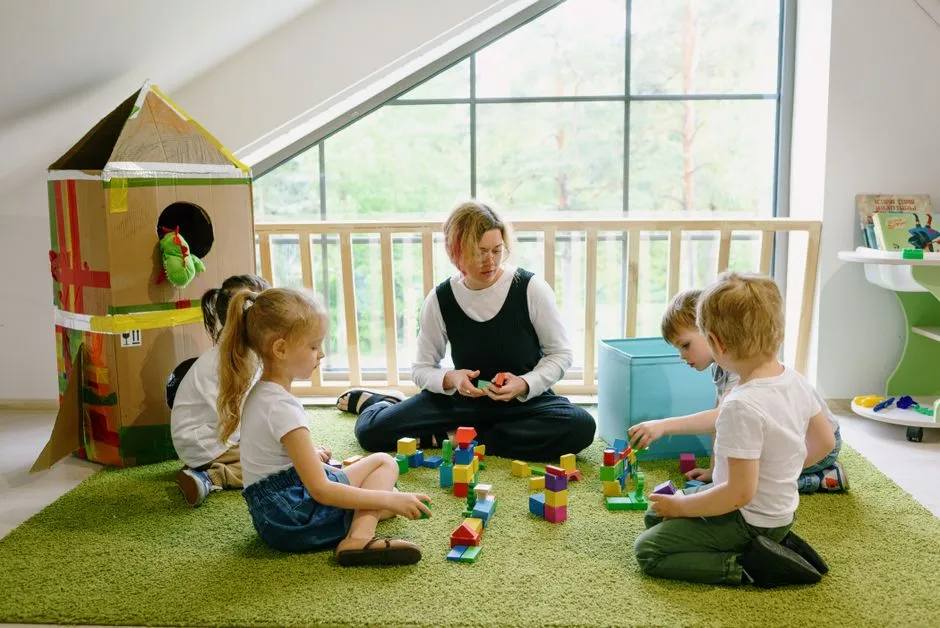
- How do you choose a daycare?
- Pass 1: define the care you need before making a list
- Pass 2: build the shortlist from official records
- How should you read a daycare inspection record?
- Pass 3: call before touring
- Pass 4: tour by following one child’s day
- Pass 5: read the policies that govern a difficult day
- Verify staff screening and training
- Ask about the care relationship, not just the curriculum
- Test the fit with one ordinary week
- A decision method that does not average away safety
- References and a second look
- What should stop the decision?
- Make the choice you can explain
How do you choose a daycare?
Choose a daycare in five passes: define the care your family can actually use, build a shortlist through your state or territory’s official child-care search, visit more than one program, read licensing and inspection records, and compare written policies with what you observed. Safety and lawful operation are gates, not score bonuses. After those pass, choose the program whose daily practice, communication, schedule, cost, and backup arrangements fit your child and household.
A warm tour matters. So does the locked gate, the inspection history, the way a caregiver responds to a crying child, and the contract clause covering a week when the center closes. Good choosing uses feeling as a signal to investigate, then asks for evidence.
Licensing categories, staff-to-child ratios, group sizes, required training, inspection systems, and license exemptions vary by state and territory. This guide does not supply universal numbers. Check the regulator that governs the exact program and age group.
Pass 1: define the care you need before making a list
A program cannot be the right choice if you cannot reliably reach it, afford it, or use its hours. Write the family constraints first:
- child’s age and intended start date;
- days and hours needed, including commute margin;
- center, licensed family child-care home, or another setting;
- maximum total cost, including registration, deposits, meals, supplies, late pickup, closure days, and annual changes;
- transport and parking reality at drop-off and pickup;
- feeding, allergy, medication, disability, language, cultural, or religious needs;
- preferred approach to naps, outdoor time, toileting, guidance, and communication;
- backup plan for illness, weather closure, staff shortage, and family schedule changes.
Separate non-negotiables from preferences. A documented allergy plan may be a gate. A particular app may be a preference. If everything is essential, the scorecard cannot tell you anything.
Also decide what you can change. A longer commute may be workable three days a week and impossible five. A lower weekly price may disappear after supplies and closure dates. Calculate the ordinary month, not just the advertised week.
Pass 2: build the shortlist from official records
Start with your state or territory’s consumer child-care portal rather than a general directory. ChildCare.gov’s current choosing guide directs families to official licensing status, inspection reports, substantiated complaints, suspensions or revocations, and any state quality-rating system.
For each candidate, record:
| Field | What to capture |
|---|---|
| Legal name and address | Match the program, operator, and exact location |
| Regulatory status | Licensed, registered, certified, or lawfully license-exempt |
| Ages authorized | Confirm the child’s age group is covered |
| Capacity and current enrollment | Ask the program; compare with the official record where available |
| Inspection history | Date, finding, severity or category, correction, and repeat pattern |
| Complaints | Whether the agency substantiated them and what followed |
| Enforcement | Conditions, probation, suspension, revocation, or closure notices |
| Quality rating or accreditation | Program name, status, date, and what the designation measures |
Licensing sets a minimum health-and-safety floor; it does not guarantee quality. ChildCare.gov explains that states and territories set and enforce licensing requirements and monitor licensed programs. A quality rating or private accreditation can add information, but neither replaces the underlying license and inspection record.
“License-exempt” does not automatically mean unlawful or unsafe. Exemptions differ, and some school, faith-based, part-day, military, relative, or small in-home arrangements may be governed another way. Ask the state agency which rule applies and what oversight, background checks, fire requirements, and complaint route remain.
How should you read a daycare inspection record?
Do not reduce the record to “violation” or “no violation.” Read four things:
- What happened? A missing form is not the same as unsafe supervision, though both may require correction.
- How serious did the regulator classify it? Use the agency’s terms, not your own guess.
- What corrected it, and when? Look for verification rather than a promise.
- Did it recur? Repetition can reveal a system problem even when each item closed.
Bring the record to the director and ask neutrally: “I saw this finding dated May 12. What changed afterward, and how do you check that the change is still working?” A strong answer identifies the procedure, responsible person, training or physical change, and continuing check. A defensive answer is not proof of danger, but refusal to discuss a public safety record is relevant evidence.
Save the record you reviewed and its date. A clean report from years ago is not the same as a current inspection history.
Pass 3: call before touring
A short call can remove options that cannot meet basic needs. Ask:
- Is there a confirmed opening for this age and start date, or only a waitlist?
- What is the complete fee schedule and deposit policy?
- What are standard hours, closure dates, and late-pickup terms?
- Is the program licensed for this setting and age group? What is the license number?
- Can the program meet the child’s documented health, feeding, disability, or communication needs?
- When can you visit while children are present and ordinary care is happening?
- Which written policies can you read before the tour?
Do not send detailed medical records through an insecure inquiry form. Ask how the program receives and protects sensitive information.
A polished call is not the test. The test is whether answers are specific, consistent, and available in writing.
Pass 4: tour by following one child’s day
On the visit, imagine arrival, meals, toileting or diapering, play, rest, transitions, pickup, and an emergency. A decorative curriculum board tells you less than watching a routine change hands.
Look at caregiver-child interaction
Observe whether adults:
- position themselves to see and hear the children;
- respond to distress rather than leaving it unacknowledged;
- use names and explain what is happening;
- get down near a child’s level;
- redirect and teach instead of humiliating, threatening, or handling roughly;
- notice quiet children as well as loud ones;
- wash hands and follow the stated hygiene routine during real transitions.
One calm room does not prove every day is calm. Ask how breaks, absences, opening, closing, and staff changes are covered. Do not ask only for the legal ratio. Ask who is assigned to the group today, who replaces that person, and how coverage is recorded. Then verify the applicable ratio and group-size rule with the state regulator.
Look at access and release controls
Ask the staff to walk you through:
- locked or monitored entry;
- visitor sign-in and identification;
- authorized pickup and custody restrictions;
- child attendance and head counts through transitions;
- playground and vehicle loading checks;
- how an unknown or unauthorized adult is handled;
- where families reunify after an evacuation.
Security theater is easy to stage. The useful answer names the routine and shows that each staff member follows it.
Look at the physical environment
Check the spaces your child would actually use, not only the lobby. Look for clear exits, secured hazardous materials and medicines, maintained play equipment, intact gates, accessible handwashing, clean diapering or toileting areas, age-appropriate materials, and room for active and quiet play.
The U.S. Consumer Product Safety Commission’s child-care checklist tells programs to check highchairs, strollers, infant swings, and other children’s products for recalls and points to CPSC’s safe-sleep resources. Ask who performs recall checks, how often the inventory is reviewed, and how recalled equipment is removed from use.
For an infant, tour the sleep area and use our safe-sleep-at-daycare questions. Safe sleep is a safety gate. Do not accept a practice that conflicts with current pediatric guidance or the applicable state rule because “this baby sleeps better that way.” Discuss any medical sleep instruction with the child’s clinician and the program through a written plan.
Pass 5: read the policies that govern a difficult day
Many programs look similar on a calm morning. Their policies distinguish them when a child is ill, a caregiver is absent, weather closes the building, or an incident occurs.
Request and read:
- illness exclusion, pickup, return, and notification policy;
- medication storage, authorization, administration, and documentation;
- allergy and emergency-action procedures;
- injury, incident, and parent-notification rules;
- emergency, evacuation, shelter, lockdown, and reunification plans;
- sleep, feeding, diapering, toileting, and outdoor-play practices;
- positive-guidance and prohibited-discipline policy;
- transportation, field-trip, water, and off-site procedures if applicable;
- photo, video, app, device, record, and privacy rules;
- authorized pickup and custody-document process;
- closure, vacation, payment, refund, withdrawal, and termination terms.
ChildCare.gov’s health-and-safety overview identifies sanitation, safe sleep, sick-child and medication handling, building safety, and emergency planning among regulated subjects. Exact implementation still belongs to your state or territory and the program’s approved procedures.
Ask for examples without requesting another family’s private information: “When was the last evacuation drill?” “How would I be told about an injury?” “Where is a medication dose recorded?” “What happens if the person scheduled to open calls out?”
Verify staff screening and training
Ask how the program confirms background-check clearance before a person has access to children, including staff, substitutes, volunteers, transportation staff, and adults in a family child-care home.
ChildCare.gov states that federal law requires states and territories to ensure staff in licensed programs pass specified state and federal criminal background checks, with requests before hire and at least every five years. The page also lists adults working or living in family child-care homes and volunteers or others with unsupervised access among covered groups. Ask the state licensing office how these requirements apply to the exact provider and whether the record shows current compliance.
Training requirements also vary by role and jurisdiction. Ask what the lead and supporting caregivers for your child’s room have completed, when CPR and first-aid credentials expire, and how new or substitute staff learn the program’s procedures. Do not treat a course title as proof of daily practice; compare the answer with what you observed.
Ask about the care relationship, not just the curriculum
Young children experience the program through people and routines. Ask:
- Who will be the child’s primary or consistent caregivers?
- How are changes communicated to families?
- How does the program learn the child’s cues, words, comfort methods, and routines?
- What happens when a child does not participate in a planned activity?
- How are conflict, biting, and difficult transitions handled?
- How often has staffing changed in this room, and what support exists during vacancies?
- What information will you receive at pickup, and who can answer follow-up questions?
A themed lesson plan cannot compensate for adults who are unavailable, unsupported, or constantly changing. Conversely, a room does not need to look like a catalog to offer attentive, consistent care.
The site’s 15 daycare interview questions turns these topics into a tour script.
Test the fit with one ordinary week
Put the program into your calendar before deciding.
Run the morning
Calculate door-to-door time on the actual route. Include parking, sign-in, handoff, siblings, and the trip onward. Repeat for pickup at the likely time.
Run a sick day
Who can leave work? How fast can an authorized person arrive? What does the written policy require before return? The policy is an operating constraint, not medical advice; use the child’s clinician for health decisions.
Run a closure
List scheduled holidays, professional-development days, weather rules, and other closure terms. Ask whether tuition remains due and what notice is typical, without assuming a guarantee.
Run a staff absence
Ask who covers the room and how the program maintains the state-required ratio, group-size, qualifications, and supervision rules. Verify the actual local requirements rather than importing a number from another state.
Run the bill
Add tuition, recurring fees, meals, supplies, transport, late charges, closure coverage, and any forfeited deposit. Compare the same period across programs.
A decision method that does not average away safety
Use gates first:
- lawful status confirmed with the regulator;
- no unresolved safety or access issue you cannot accept;
- applicable supervision and staffing rules understood;
- health, allergy, medication, sleep, and emergency needs can be met in writing;
- pickup and release controls are workable;
- contract terms are understood.
If a program fails a gate, do not let a beautiful yard earn enough points to cancel it out.
Then score the remaining options from 1 to 5 on your family’s preferences: caregiver interaction, continuity, communication, schedule, location, total cost, environment, outdoor time, food, and educational approach. Weight only the factors that truly differ. Write one observed fact beside every score.
| Factor | Weight | Evidence, not impression |
|---|---|---|
| Daily interaction | 5 | What caregivers did during the visit |
| Reliability and hours | 5 | Contract, calendar, and coverage explanation |
| Communication | 4 | Actual report example and escalation route |
| Commute | 4 | Timed ordinary drop-off and pickup |
| Total cost | 4 | Complete same-period calculation |
| Environment and activities | 3 | What children used during the visit |
The numbers organize a decision; they do not discover truth. If your instinct says no, name the observation behind it and investigate. If your instinct says yes, still finish the records and policy review.
References and a second look
Ask whether the program can connect you with current families who have agreed to speak, while respecting their privacy. Ask references about communication, staffing changes, closures, billing accuracy, incident response, and whether written practices match ordinary days. A glowing general endorsement is pleasant; a specific example is useful.
If possible, return at a different ordinary time by appointment. Pickup may reveal communication and release routines that a midmorning tour cannot. Follow the program’s security process; unannounced access should not be expected in a setting responsible for children.
What should stop the decision?
Stop and verify before enrolling if the program refuses to identify its regulatory status, discourages access to public inspection records, will not provide required written policies, cannot explain supervision or authorized pickup, minimizes a serious inspection finding, uses prohibited or frightening discipline, conceals areas children use, or pressures you to sign before reviewing the contract.
If you observe suspected abuse, unsafe supervision, or an immediate hazard, protect the child and use the appropriate emergency, child-protection, or state licensing report route. Do not negotiate an immediate danger as a customer-service issue.
Make the choice you can explain
The best daycare is not the one with the most persuasive tour. It is the one that clears the safety and regulatory gates, treats children attentively, follows coherent routines, communicates plainly, and works on an ordinary Tuesday as well as on enrollment day.
Keep a dated file with the license lookup, inspection records, policies, contract, fee calculation, visit notes, and unanswered questions. Choosing care is not a one-time verdict. Those documents give you a baseline for checking whether the program you selected continues to be the program your child attends.